

Functional Rehabilitation That Restores How Your Body Actually Works
Is Functional Rehabilitation Right for You?
Functional rehabilitation in Albuquerque NM or Rio Rancho NM may be appropriate if:
- Pain keeps returning after treatment
- You feel unstable, weak, or hesitant to move
- Daily activities feel harder than they should
- You're worried about re-injury
- You want your body to work — not just stop hurting
Functional rehab is not about aesthetics or workouts.
It's about control, stability, and resilience.
Why Pain Relief without rehab often fails
Many people feel better temporarily — then end up right back where they started.
That's because:
- Pain relief doesn't change movement patterns
- Weak links stay weak
- Poor coordination recreates stress
- The body returns to compensation
Without rebuilding function, pain relief rarely holds.
How we use functional rehab differently
At Gonstead Physical Medicine, functional rehabilitation is built around how your body actually needs to move.
We focus on:
- Stability before strength
- Coordination before load
- Control before intensity
Using tools like:
- Waterbag training
- REAX board stability work
- Cable and resistance systems
- Progressive strength and power training
We train the body to adapt — not memorize exercises.
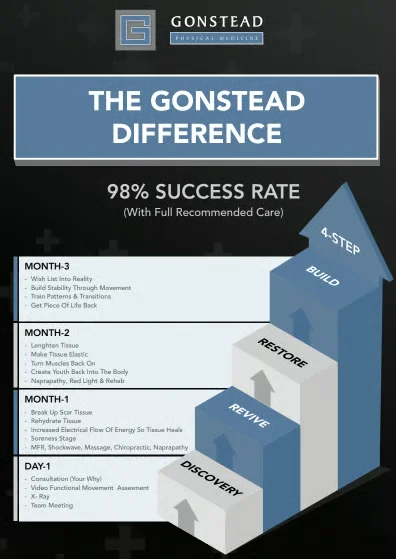
Where Functional Rehab fits into your care plan
Discovery
We identify movement patterns, stability gaps, and compensations contributing to pain or dysfunction.
Revive
Early rehab supports healing while reinforcing safe movement and control.
Restore
We rebuild stability, coordination, and strength in patterns that match daily life.
Build
We train resilience — preparing your body for work, sport, and unpredictable environments.
What to expect during Functional Rehab
- Exercises tailored to your body and goals
- Emphasis on quality over quantity
- Progression based on control, not fatigue
Care plans vary based on:
- Your condition and history
- Stability and coordination
- Daily demands and goals
- Movement quality and stability
What Functional Rehab Can — and Can’t Do
It CAN:
- Improve stability and movement confidence
- Reduce injury risk
- Help results from care last longer
- Restore function for real life
It CANNOT:
- Work if done inconsistently
- Replace accountability
- Override poor habits without effort
That's why we partner with patients who are ready to participate in getting their life back.